

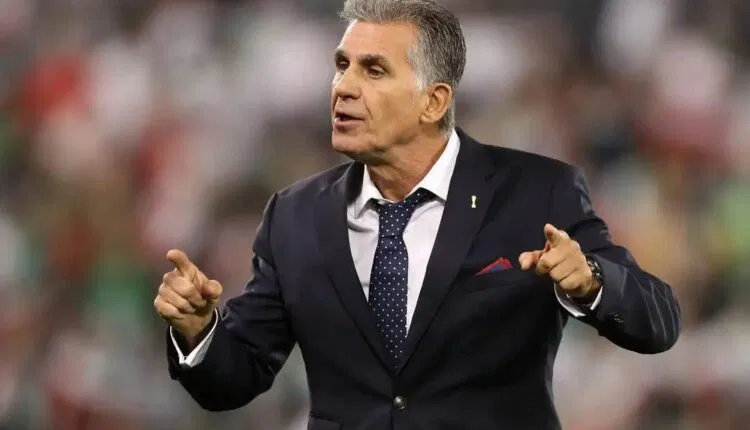
1. Born in Africa Queiroz was born on 1 March 1953 in Nampula, Mozambique (then Portuguese Mozambique), giving him a unique connection to the African continent despite his Portuguese nationality.
2. Youth coaching legend He rose to fame by guiding Portugal’s Under-20 team to back-to-back FIFA World Youth Championship titles in 1989 and 1991, helping develop the famous “Golden Generation” that included stars like Luís Figo and Rui Costa.
3. World Cup specialist Queiroz has taken four different national teams to the FIFA World Cup — South Africa (2002), Portugal (2010), and Iran (2014, 2018, and 2022) — making him one of the most experienced coaches at the tournament.
4. Longest-serving Iran coach He spent nearly eight years with Iran (2011–2019), qualifying them for two consecutive World Cups for the first time in their history and building a very disciplined, hard-to-beat side.
5. Assistant to Sir Alex Ferguson He served two spells as assistant manager at Manchester United (2002–03 and 2004–08), contributing to three Premier League titles and the 2008 UEFA Champions League win. Ferguson often praised his tactical knowledge.
6. Brief Real Madrid stint In 2003–04, he managed Real Madrid, winning the Spanish Super Cup but struggling in La Liga before being dismissed.
7. Globe-trotting experience Queiroz has coached in more than 10 countries across five continents, including South Africa, Colombia, Egypt, Qatar, UAE, Japan (Nagoya Grampus), and the USA (New York/New Jersey MetroStars in 1996).
8. Tactical disciplinarian He is known for his organised, defensive-minded approach, strong team discipline, and ability to get results with limited resources — often turning underdogs into tough opponents.
9. Africa Cup of Nations finalist With Egypt in 2021, he reached the final of the AFCON (losing to Senegal on penalties), showing he understands African football pressures.
10. At 73, still passionate Now 73 years old, the veteran (sometimes self-described as one of the “last dinosaurs” of coaching) brings vast wisdom, multilingual skills, and a love for developing players — exactly what the Black Stars need ahead of their Group stage matches against Panama, England, and Croatia in 2026.