

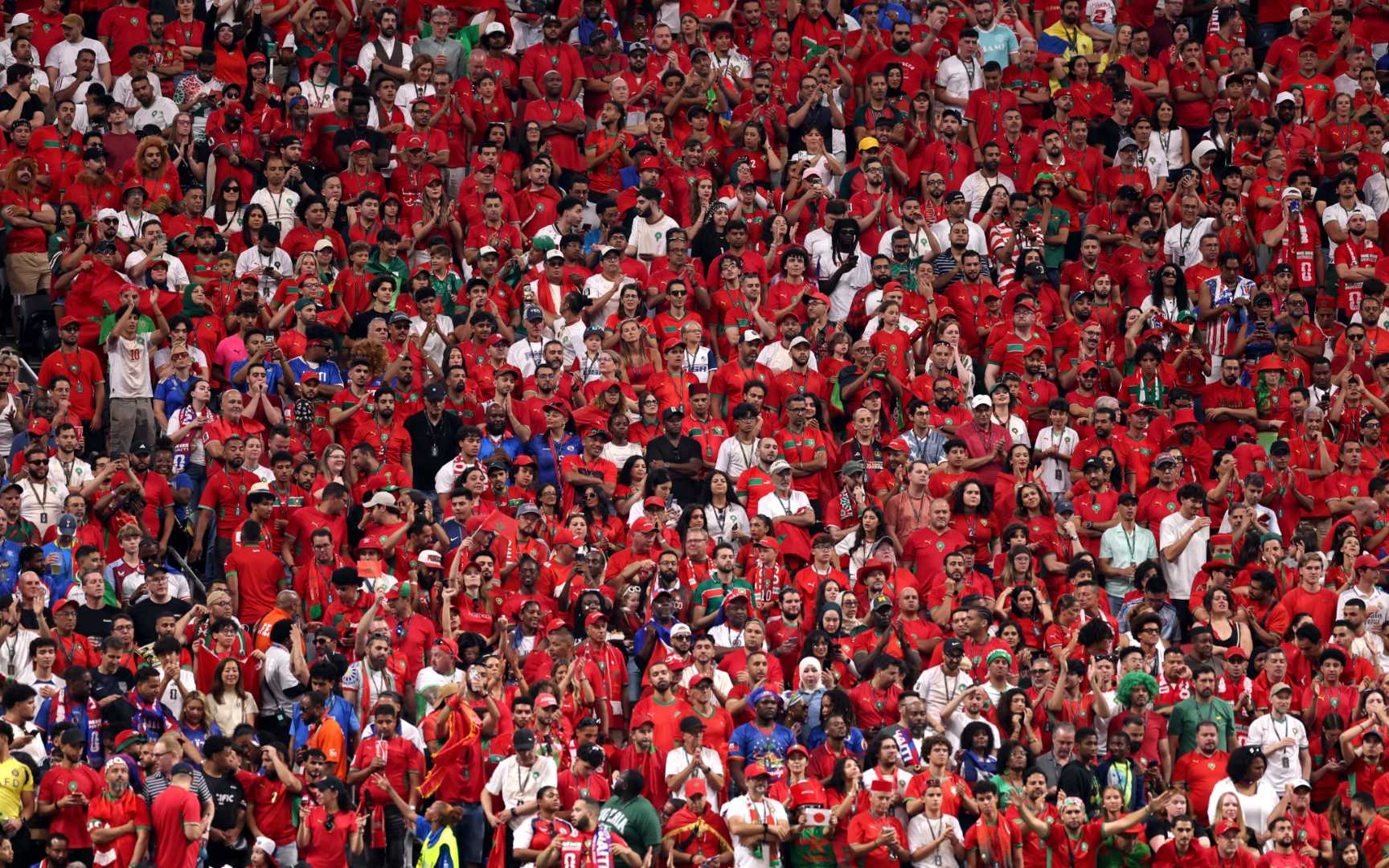
MIAMI, July 11, 2026 – African national teams concluded their participation in the 2026 FIFA World Cup with an unprecedented record in the continent’s history, after achieving a historic representation of ten teams for the first time. Nine of them succeeded in reaching the knockout stages or the special playoff matches for the best third-placed teams. Although no African representative reached the semi-finals, the tournament confirmed the continuous progress of African football, both collectively and through the individual statistics achieved by the continent’s stars.
Morocco… African Leadership and a Historic Campaign
The Moroccan national team continued to make history, finishing the 2026 World Cup as Africa’s best-performing side by reaching the quarter-finals, confirming that its achievement in the 2022 edition was not merely a one-time success.
The Atlas Lions delivered a strong campaign that began with a 1-1 draw against Brazil, followed by victories over Scotland (1-0) and Haiti (4-2). They then defeated the Netherlands on penalties before beating Canada to reach the quarter-finals, where they faced France and lost 0-2.
Despite their elimination, Morocco left the tournament with their heads held high, becoming one of the most influential African teams in World Cup history and continuing to build on the legacy of the generation that created the historic 2022 achievement.
Egypt… Strong Presence and a Near Historic Achievement
The Egyptian national team also delivered an impressive performance, proving its ability to compete against some of the world’s strongest sides. The Pharaohs defeated Australia on penalties before facing Argentina in a thrilling encounter. Egypt took a two-goal lead, but the match ended in a painful 3-2 defeat in the final moments.
Although their journey ended in the Round of 16, Egypt demonstrated that it possesses players capable of competing at the highest level and secured a prominent position among Africa’s best teams in the tournament, both in terms of performance and attacking effectiveness.
Record Participation and Different Paths for African Teams
The 2026 edition witnessed the largest African representation in World Cup history, with ten participating teams. Nine of them managed to progress beyond the group stage or reach the knockout rounds, while Tunisia was the only African side eliminated in the first round.
The African teams’ results were as follows:
* Morocco: Quarter-finals.
* Egypt: Round of 16.
* South Africa: Round of 32.
* Algeria: Round of 32.
* Cape Verde: Round of 32.
* Ivory Coast: Round of 32.
* Ghana: Round of 32.
* Senegal: Round of 32.
* Democratic Republic of the Congo: Round of 32.
* Tunisia: Group stage.
Tunisia had the most difficult campaign, finishing without points, conceding 12 goals and scoring only two.
Meanwhile, seven African teams were eliminated in the Round of 32 after closely contested matches. Senegal lost to Belgium 3-2 after extra time, DR Congo fell to England 1-2, and Ivory Coast’s journey ended against Norway with a 1-2 defeat.
South Africa also exited after conceding a late goal against Canada, Ghana lost to Colombia, and Algeria’s campaign ended with a 0-2 defeat to Switzerland.
Cape Verde… A Surprise That Made History
Cape Verde produced one of the tournament’s most inspiring stories in its first-ever World Cup appearance, delivering impressive performances against major teams and coming close to a historic upset against Argentina before losing 3-2 after extra time.
The team proved that African representation at the World Cup is no longer limited to traditional football powers, but is now open to emerging nations capable of producing major surprises.
Senegal and Morocco… Africa’s Strongest Attacks
Offensively, Senegal and Morocco led the African teams, with each scoring 10 goals during the tournament.
Egypt ranked third with eight goals, while Ivory Coast, Algeria, and DR Congo each scored five goals. Cape Verde followed with four goals.
Ghana, South Africa, and Tunisia managed only two goals each.
Ismaïla Sarr Crowned Africa’s Top Scorer
Senegalese forward Ismaïla Sarr finished as Africa’s top scorer at the 2026 World Cup after scoring four goals, matching the achievement of Cameroonian Roger Milla as the best-ever scoring record by an African player in a single World Cup edition.
DR Congo’s Yoane Wissa and Morocco’s Ismael Saibari ranked second with three goals each.
The leading African scorers included:
* Ismaïla Sarr (Senegal): 4 goals.
* Yoane Wissa (DR Congo): 3 goals.
* Ismael Saibari (Morocco): 3 goals.
* Soufiane Rahimi (Morocco): 2 goals.
* Nicolas Pépé (Ivory Coast): 2 goals.
* Pape Gueye (Senegal): 2 goals.
* Riyad Mahrez (Algeria): 2 goals.
* Mostafa Zizo (Egypt): 2 goals.
* Habib Diarra (Senegal): 2 goals.
* Amad Diallo (Ivory Coast): 2 goals.
Ghana… Africa’s Strongest Defense
Defensive statistics highlighted Ghana’s superiority, as the team finished the tournament with the strongest African defense, conceding only three goals in four matches.
Ivory Coast and South Africa followed with four goals conceded each, while DR Congo and Cape Verde allowed five goals.
Morocco conceded six goals in six matches, achieving the best defensive average among African teams that reached the advanced stages, with only one goal conceded per match.
Morocco Dominates Historical Participation Records
Moroccan players continued to write their names into World Cup history, as three Atlas Lions players occupied the top positions among Africa’s most-capped players in the tournament.
Achraf Hakimi led the ranking with 16 appearances, followed by Azzedine Ounahi with 13 matches and goalkeeper Yassine Bounou with 12.
Morocco also became the African team with the most World Cup matches in history, reaching 29 games, ahead of Cameroon (26 matches), and Nigeria and Tunisia (21 matches each).
Brahim Díaz and Maza… Stars of Individual Statistics
Morocco’s Brahim Díaz emerged as the best African assist provider at the tournament, recording four assists and clearly surpassing the other players.
Behind him were several players with two assists, including Houssem Aouar, Iliman Ndiaye, Mohamed Salah, Hannibal Mejbri, Riyad Mahrez, Pape Gueye, Nicolas Pépé, Amad Diallo, and Achraf Hakimi.
Algerian youngster Ibrahim Maza was also one of the biggest discoveries of the 2026 World Cup, topping the African dribbling statistics with 14 successful dribbles, ahead of Ivory Coast’s Amad Diallo (10 dribbles) and Morocco’s Brahim Díaz (9 dribbles).
Tunisia Tops the Fair Play Ranking
Despite their early exit, Tunisia achieved Africa’s best disciplinary record by topping the fair play ranking with only one yellow card and no red cards.
Algeria and Senegal followed with three yellow cards each, while Morocco finished the tournament with seven yellow cards and no dismissals.
Egypt was the most penalized African team, receiving 12 yellow cards and one red card.
Conclusion… Africa Moves Closer to the Big Dream
The 2026 World Cup confirmed that African football has entered a new era. Success is no longer linked to a single national team; instead, the continent now possesses a wide range of teams capable of challenging the world’s elite.
Between Morocco’s historic achievement, Egypt’s strong showing, Senegal’s attacking power, Ghana’s defensive strength, and the brilliance of stars such as Ismaïla Sarr, Brahim Díaz, and Ibrahim Maza, Africa has sent a clear message: achieving an even greater World Cup milestone is no longer a distant dream, but an increasingly realistic goal with every new edition.