

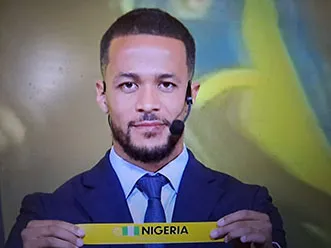
Nigeria will renew familiar rivalries with Madagascar and Guinea-Bissau, and also with Tanzania, after the Super Eagles were drawn in a potentially tricky Group L of the African qualifiers, while continental heavyweights across the continent face a mixture of political tension, regional derbies and dangerous underdogs on the road to the next major tournament.
The draw, which produced 12 groups spread across the continent, immediately highlighted several intriguing subplots beyond the traditional favourites expected to dominate qualification.
In Group L, three-time African champions Nigeria will confront Madagascar, Tanzania and Guinea-Bissau in what appears, on paper, a favourable section. Yet the Super Eagles have painful memories of Madagascar, who stunned Nigeria 2-0 at the 2019 Africa Cup of Nations in Egypt, while Guinea-Bissau have become increasingly competitive in recent years.
Both Nigeria and Guinea-Bissau were in the same qualifying group for the 2023 edition, with Guinea-Bissau stunning the Super Eagles with a 1-0 defeat in Abuja, and it took a penalty kick for Nigeria to avenge the defeat a week later in Bissau.
When both met again in the final competition two years ago, Cote d’Ivoire and Nigeria only profited from an own goal to overcome the slippery Guinea-Bissau.
Tanzania, boosted by regular continental exposure, could also prove difficult opponents, especially at home. The last time both teams met at the 2017 qualifiers, they played goalless in Dar-es-Salaam while Nigeria scraped a 1-0 win in Uyo in what was Gernot Rohr’s first outing with Nigeria.
The group nevertheless offers Nigeria an opportunity to reassert continental authority after inconsistent qualification campaigns in recent years. Much may depend on whether the Super Eagles can avoid the away-day struggles that have often complicated seemingly straightforward African qualifying fixtures.
Defending African champions Morocco national football team headline Group A alongside Gabon, Niger and Lesotho. Morocco will be overwhelming favourites, particularly after their historic FIFA World Cup semi-final run elevated expectations around the Atlas Lions. However, Gabon’s experience and the physical difficulty of away matches in Central Africa could still provide occasional resistance.
Group C has emerged as one of the draw’s most explosive sections, pitting the continental giants Côte d’Ivoire national football team against the Ghana national football team. The rivalry between the West African neighbours has produced some of Africa’s fiercest modern contests, and with Gambia and Somalia also involved, every dropped point could become decisive.
Another heavyweight confrontation lies in Group D where the South Africa national football team face Guinea, Kenya and Eritrea. South Africa’s growing confidence under recent rebuilding efforts will be tested by a Guinea side blessed with technical quality and physical strength.
Group G may prove one of the most unpredictable. The Cameroon national football team must navigate encounters with Comoros, Namibia and Congo. Cameroon’s pedigree makes them favourites, but Comoros are no longer continental newcomers after their impressive AFCON rise, while Namibia continue to show tactical discipline and organisation.
The North African powers also received challenging assignments. Tunisia national football team were paired with Uganda, Libya and Botswana in Group H, while Algeria national football team will battle Zambia, Togo and Burundi in Group I. Zambia’s resurgence could make that section one of the most competitive in the draw.
Perhaps the toughest-looking group overall is Group J, where African champions Senegal national football team meet Mozambique, Sudan and Ethiopia. Sudan’s recent rise on the continental stage and Ethiopia’s difficult home conditions mean Senegal cannot afford complacency.
Elsewhere, Egypt headlines Group B against Angola, Malawi and South Sudan, while Mali, Cape Verde, Rwanda and Liberia make up an evenly balanced Group K that could produce surprise outcomes.
Beyond the football itself, the draw again underlines Africa’s growing competitive depth. Smaller nations that were once regarded as mere participants — including Comoros, Botswana, Namibia and Madagascar — now possess the structure and tactical organisation capable of disrupting established powers.
The qualification campaign is therefore unlikely to be a straightforward procession for Africa’s traditional giants. Instead, it promises another chapter in the continent’s increasingly unpredictable football evolution, where reputation alone no longer guarantees safe passage.